Bonded & Insured Serving Greater Phoenix (480) 420-7391
Novak Painting Group
Free Estimate
Fence Painting & Staining · Phoenix, AZ

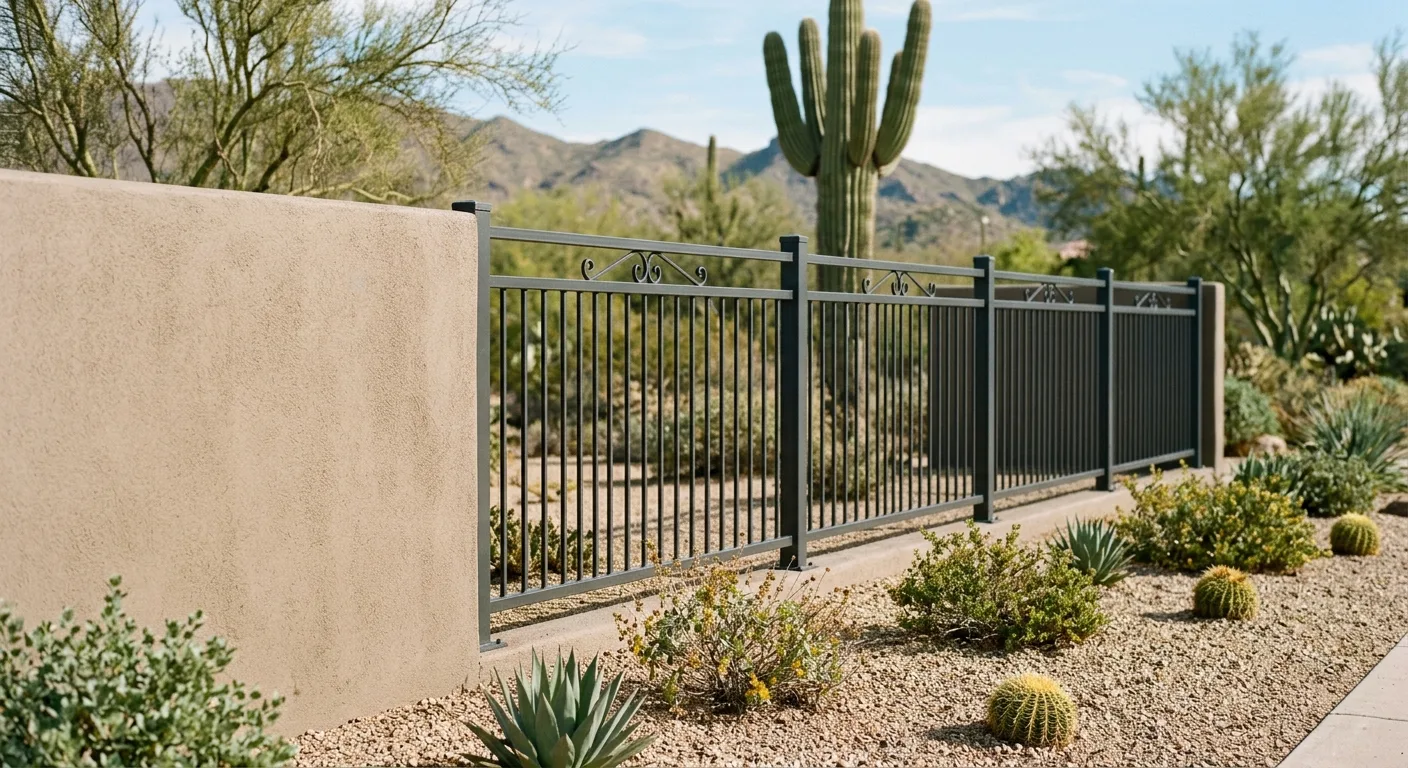
Fence painting and staining in Phoenix, block, wood, and iron.

Chalky block walls, grayed-out wood, and rusting iron are what the desert sun does to a fence left to fend for itself. We prep each surface for what it actually is, then coat it to hold up to Valley UV, so the fence stops looking a decade older than the house.

  • Block, wood, and wrought iron each prepped for the surface they are, not one-coat-fits-all
  • Owner Cody Novak quotes the fence in person, so the scope is set before a crew shows up
  • Bonded and insured, locally owned across Greater Phoenix
Fence painting and staining in Phoenix,
Start your project

BONDED & INSURED · SERVING GREATER PHOENIX

Interior Painting Exterior Painting Cabinet Refinishing Commercial Painting Stucco Repair Color Consultation Bonded & Insured Serving Greater Phoenix
Why fences fail here

What the Arizona desert does to a fence, by material

A fence doesn't weather evenly in the Valley. It fails in a pattern that depends entirely on what it's made of and which way it faces, and that's exactly what decides the prep. Here's what we read on nearly every fence-line we're called to look at.
01

Block walls chalk on the sun side

Painting a block wall fence is common in Phoenix because masonry boundary walls are everywhere, and the south and west faces take the worst UV. The old coating chalks to a dusty film that rubs off on your hand, and a fresh coat rolled straight over that chalk has nothing to grip and sheets off within a season. The fix is a proper wash to strip the chalk first, then a masonry coating rated for the exposure.
02

Wood grays out and splinters

Direct desert UV bleaches the color and the natural oils out of an unsealed wood fence, and the monsoon-then-dry swing swells and shrinks the boards until they check and splinter. A rich stain can wash out to gray in a couple of summers if the seal on top fails. Wood needs pigment and a real seal, not just paint slapped on top.
03

Wrought iron rusts and bleeds through

This is the one generic painters ignore. Wrought iron rusts from the inside out in the desert, and if you paint over active rust without grinding it back to sound metal and priming with a rust-inhibitive primer, the rust bleeds right back through the new finish and streaks down onto the block below. The prep on iron is the whole job.
04

PVC and vinyl fade and chalk

Painting a PVC or vinyl fence is the trickiest of the lot, and most painters won't touch it. Vinyl is a slick, non-porous surface, so ordinary paint won't bond to it, and the sun-faded white or tan chalks the same way old block does. It can be painted, but only with the right prep: a thorough clean, a bonding primer made for plastics, and a coating that flexes with the vinyl as it expands in the heat instead of cracking. Pick a color no darker than the original, too, or a dark coat soaks up desert heat and warps the panels.
05

One fence line, two or three ages

Most Phoenix properties run a mix: a block perimeter wall, a wood side gate, and iron on the front. Left alone, they weather at different rates and read as three different ages. We scope the whole boundary together and match the finishes so the fence line looks intentional, not pieced together over years.

SELECTED WORK

Four spaces.
One consistent standard.

A compact look at recent exterior, interior, and whole-home finishes completed across Greater Phoenix.

START YOUR PROJECT

EXTERIOR INTERIOR CABINET REFINISHING WHOLE-HOME PAINTING

Block wall fences

Painting a block wall fence in Phoenix

Painting a block wall fence is the most common fence job we run in the Valley, because masonry perimeter walls are on nearly every property out here, and the whole thing lives or dies on prep. Here's how we handle a block or masonry wall so the coat actually lasts.

Strip the chalk before anything else

The old coating on a sun-baked masonry wall chalks to a dusty film, worst on the south and west faces that take the hardest afternoon UV. Roll a fresh coat straight over that chalk and it has nothing to grip, so it sheets off within a season. We pressure-wash the wall down to sound, chalk-free masonry first, then patch any spalled or cracked block, because a coat is only as good as the surface under it.

Once the wall is clean and patched, we coat it with a masonry paint rated for direct Valley UV, worked into the texture so it bonds instead of bridging. A boundary wall done this way holds its color through the summers instead of fading back to chalk in a year. Want the block wall looked at in person? Request a free estimate and we'll read the condition before quoting.

Wood fences

Painting a wood fence so it survives the Valley sun

Painting a wood fence in Phoenix is really a choice between paint and stain, and in this climate that choice matters more than the color. Here's how we approach it.

Wash and sand back to sound wood first

We start by washing and sanding the boards back to sound, open wood so the finish can actually bond. A coat rolled over a slick, still-partly-sealed or graying board just sits on top and peels, so the prep is where a lasting wood fence finish is decided.

After the color goes on, a wood fence in full sun needs a sealer over the top to lock out water and slow the UV burn on the finish underneath. Skip it and the stain you just paid for washes out with the first hard monsoon and the summer that follows. Ready to talk paint versus stain for your fence? Call (480) 420-7391 and we'll come look at the boards before quoting.

Wrought iron fences

Wrought iron fence painting: the rust is the whole job

Wrought iron fence painting fails or lasts entirely on how the rust was handled before the topcoat. This is the step generic painters skip, and it's the reason so many repainted iron fences are streaking rust again within a year. Here's how we do it right.

  1. Read the rust. We check every picket, rail, and post for active rust, flaking scale, and the spots where the coating has already lifted. Ground-contact posts and the bottom rail take it worst in the Valley, since sprinkler overspray and monsoon runoff sit against the metal.
  2. Grind and wire-brush back to sound metal. We take the rust back to bare, sound steel with wire wheels and abrasives. Painting over active rust just seals it in to keep spreading, so this is the step that actually stops the bleed-through onto the block below.
  3. Rust-inhibitive primer first. Bare metal gets a rust-inhibitive metal primer that bonds to steel and blocks the rust from coming back through. This is a different primer than anything you'd use on wood or block, and using the right one is the difference between a finish that holds and one that streaks by spring.
  4. Direct-to-metal topcoat. Then a hard enamel or direct-to-metal coating rated for exterior sun, usually in satin or gloss black or a bronze to match the original. Sprayed or brushed depending on the picket detail and how close the fence sits to landscaping and cars.

On an iron fence, the paint you see is only as good as the rust you don't. Grind it back, prime it right, and the finish lasts. Skip that and you're repainting rust streaks next spring.

Got an iron fence weeping rust down the wall? Request a free estimate and we'll read the metal in person before quoting.

Painting a fence black

Painting a fence black in the desert

Black is the most-requested fence color we get asked about, and for good reason: a crisp black iron fence or a dark boundary wall reads modern and makes the landscaping pop. The catch in Phoenix is heat. A black finish absorbs more sun than any other color, so it runs hotter and the coating works harder, which means the color and the product you put under that black matter more here than they would anywhere cooler.

Black on wrought iron

On wrought iron, black is the natural call, and the finish holds as long as the rust prep underneath is right. We grind the metal back to sound steel, lay a rust-inhibitive primer, then a direct-to-metal black enamel in satin or gloss. Done over proper prep, a black iron fence stays black. Skip the grinding and the rust streaks right back through the black within a season.

Black also shows every bit of prep, or the lack of it. Dust, chalk, and rust ghost through a black coat worse than a lighter color hides them, so the wash, the sanding, and the primer are what make a black fence look sharp instead of blotchy. Thinking black for the fence or the wall? Call (480) 420-7391 and we'll tell you straight what your surface takes.

PVC and vinyl fences

Can you paint a PVC or vinyl fence?

Short answer: yes, a PVC or vinyl fence can be painted, but it's the one fence material where the wrong approach fails fastest, and plenty of painters just won't take it on. Vinyl is slick and non-porous, so ordinary exterior paint beads up and peels instead of bonding. Here's what actually makes it stick.

  1. Deep clean the whole surface. Years of desert dust, chalk, and any mildew have to come off first. We wash the vinyl down so the primer bonds to the plastic, not to a film of grime sitting on top of it.
  2. Bonding primer made for plastics. This is the step that matters. Vinyl needs a primer specifically rated to grip non-porous plastic, not a standard masonry or wood primer. Without it, nothing you put on top lasts.
  3. A flexible topcoat, color no darker than the original. Vinyl expands and contracts in the heat, so the finish has to flex with it instead of cracking. And because a dark color absorbs heat that can warp the panels, we keep the new color at or lighter than the original shade unless the product is specifically rated to go darker.

Straight talk: if a vinyl fence is already cracked, brittle, or sagging from years of sun, paint won't fix structure, and we'll tell you that in person rather than coat a fence that's already failing. Get a free quote and we'll read the vinyl before we commit to painting it.

What drives the price

What affects the cost of fence painting

People want a number, and we get it. The honest answer is that fence painting cost swings on a handful of specific things, which is exactly why Cody quotes the actual fence in person instead of throwing out a figure over the phone. Here's what moves the price, so the estimate makes sense when you get it.

  • The material. Block, wood, iron, and vinyl each need different prep and different products. Iron with heavy rust takes the most hand-work; a clean block wall takes the least.
  • The condition. A fence that just needs a wash and a fresh coat costs far less than one that needs a full strip, rust grinding, patching, or board replacement before a coat can go on.
  • Length and height of the run. A long perimeter wall is more surface than a single side gate, and taller walls add setup. Square footage of actual fence is the real driver, not a flat per-fence rate.
  • Paint versus stain, one coat versus two. A stain-and-seal on wood, a two-coat masonry system on sun-hit block, or a prime-plus-enamel on iron all carry different product and labor than a single refresh coat.
  • Access and masking. A fence tight against landscaping, pools, cars, or a neighbor's yard needs careful masking so overspray doesn't drift, and that careful work is part of the scope.

The surface and its condition set the number, not the length of the fence alone. That's why we walk it before we quote, and why the estimate is free.

What we won't do is quote a fence we haven't seen or pad the scope with work it doesn't need. Cody walks the fence line, tells you which sections need a full recoat and which just need a wash and a coat, and gives you the number before a crew shows up. Request a free estimate and you'll know the scope and the price up front.

What you get

Block, wood, and iron fences, coated for the desert

The value here is that one crew reads the whole boundary and preps each material for what it actually is. Here's what fence painting and staining covers with us, plus one honest note on when a fence isn't the right call for a fresh coat yet.
01

Block and masonry wall fences

Perimeter block walls, painted CMU, and stuccoed masonry fences washed to strip the chalk, patched where the block has spalled, then coated with a masonry paint rated for direct Valley UV. Matched to your HOA palette so a repaint doesn't turn into a violation letter.
02

Wood fences, painted or stained

Cedar, redwood, and pine fences and gates sanded back and finished with either a solid paint or, more often here, a semi-transparent stain and seal that weathers by fading instead of peeling. Pigment for UV protection, seal on top to lock out monsoon water.
03

Wrought iron fences and gates

Iron fences, entry gates, and railings wire-brushed back to sound metal, primed with a rust-inhibitive primer, and topcoated with a direct-to-metal enamel. The rust prep is what stops the streaks on the block below, and it's the part we never shortcut.
04

PVC and vinyl fences, done the one way that holds

Faded white or tan vinyl cleaned, primed with a bonding primer made for non-porous plastic, and finished in a flexible coating that moves with the panels instead of cracking. We keep the color at or lighter than the original so a dark coat doesn't soak up heat and warp the vinyl. Most painters skip vinyl; we'll do it when the panels are sound.
05

When a fence isn't ready for a coat

Straight talk: if your wood fence posts are rotted at the base and wobbling, or an iron fence has rusted clean through the pickets or the bottom rail, no coating will save it and we'll tell you that in person. At that point board or section replacement is the right spend first, not a paint job that fails by next monsoon. Fresh coating brings back sound material, not structure that's already gone.

Fence painting and staining across the Greater Phoenix area

We paint and stain block walls, wood fences, wrought iron, and PVC vinyl throughout Phoenix and across the Valley: Scottsdale, Mesa, Tempe, Chandler, Gilbert, Glendale, Peoria, Surprise, Goodyear, Avondale, and Paradise Valley. From long block perimeter walls in West Valley HOA neighborhoods to weathered redwood side gates and front-yard iron painted black in older Central Phoenix, the sun exposure and the material are what we build every quote around. Painting the house or the deck too? We also handle exterior painting and deck staining and sealing across the same area. Not sure you're in range? Get in touch and we'll tell you straight.

Ready to fix a fence that's aging the whole yard?

Call Cody and the crew directly at (480) 420-7391 for a free, on-site fence estimate. No voicemail maze, no scheduling software, just a real conversation about which sections need a full recoat and which just need a wash and a fresh coat.

Call (480) 420-7391

Or send us your info

Ready when you are

Get an honest fence quote, on site, for free.

Tell us what your fence is made of and we'll follow up within one business day. We come walk the actual fence line before we give you a number, and we'll say straight up which sections need a full strip-and-recoat and which just need a fresh coat. No pressure, no upsells.

Free estimatesBonded & insuredBlock, wood & iron

WHY NOVAK

Why the finish holds up.
It’s built in layers.

A paint job is only as good as the system underneath it.

Novak Painting Group treats scope, preparation, coating selection, and final inspection as one connected process, not separate tasks to rush through.

CLEAR SCOPE SURFACE-SPECIFIC PREP PHOENIX-READY COATINGS
THE NOVAK FINISH SYSTEM FOUR LAYERS FROM SUBSTRATE TO WALKTHROUGH

Scope before color

Surfaces, repairs, products, colors, access, and timing are defined before work begins.

The finish starts underneath

Protection, cleaning, repair, sanding, and priming create the surface the topcoat needs.

Chosen for Phoenix

Coatings are matched to the material, exposure, sheen, and demands of Arizona heat and sun.

Checked in the light it lives in

Coverage, edges, touchups, and the final walkthrough are handled with the same careful eye.

Frequently Asked

Frequently Asked Questions

What is the best paint for a fence in Arizona heat? +
It depends on the fence material, because they don't take the same product. On a block or masonry wall fence, a quality masonry or elastomeric coating rated for direct UV holds up best, applied over washed, chalk-free block. On a wood fence in full sun, a semi-transparent or semi-solid stain with real pigment usually outlasts a solid paint film, because it weathers by fading instead of peeling when the desert swells and shrinks the boards. On wrought iron, the topcoat is a rust-inhibitive primer plus a direct-to-metal enamel. Across all three, UV-resistant product and proper prep matter far more than the brand on the can, which is why we spec it to the surface in person.
Can you paint a PVC or vinyl fence? +
Yes, a PVC or vinyl fence can be painted, but it's the material where the wrong approach fails fastest, which is why a lot of painters won't touch it. Vinyl is slick and non-porous, so ordinary exterior paint beads up and peels instead of bonding. The job is in the prep: we deep-clean the panels so the primer bonds to the plastic rather than a film of desert dust, prime with a bonding primer specifically rated for non-porous plastic, then finish with a flexible coating that moves with the vinyl as it expands in the heat instead of cracking. One hard rule out here: keep the new color at or lighter than the original, because a dark coat soaks up desert heat and can warp the panels. If the vinyl is already cracked or brittle from years of sun, paint won't fix structure, and we'll tell you that in person.
Can you paint a fence black in Phoenix? +
Yes, and black is the color we get asked about most. On wrought iron, black is the natural call and it holds up well, as long as the rust underneath is ground back to sound metal and sealed with a rust-inhibitive primer before the direct-to-metal black enamel goes on. On a block or masonry wall, black is fine too, over properly washed, chalk-free masonry. The one place to be careful is vinyl: a true deep black on a PVC fence absorbs so much desert heat it can warp the panels, so on vinyl we steer you toward a darker gray or a heat-reflective product rated for the material instead. Black also shows every bit of prep, so the wash, sanding, and primer are what keep a black fence looking sharp rather than blotchy.
What affects the cost of fence painting? +
Fence painting cost swings on the material, the condition, and the size of the run, which is why we quote the actual fence in person instead of giving a flat per-fence number. Material matters because block, wood, iron, and vinyl each need different prep and products: iron with heavy rust takes the most hand-work, a clean block wall the least. Condition matters because a fence that just needs a wash and a fresh coat costs far less than one needing a full strip, rust grinding, patching, or board replacement first. Length and height drive it too, since square footage of actual fence is the real measure, not the number of fences. Paint versus stain, one coat versus two, and how much masking the fence needs near landscaping, pools, or cars all factor in. Cody walks the fence line and gives you the scope and the number before a crew shows up, and the estimate is free.
Should you spray or brush a fence when painting it? +
Both have a place, and we choose by the fence and the setting. Spraying is fast and lays down an even coat on a long block wall or a slatted wood fence, but it needs careful masking so overspray doesn't drift onto cars, landscaping, or a neighbor's yard, which is a real concern on a boundary line. Brushing and rolling give more control on detailed wrought iron pickets and tight spots, and push the coating into the surface for better adhesion. On many jobs we back-brush or back-roll after spraying to get both, an even coat that's also worked into the wood or metal. The right call comes down to the material, how close the fence sits to things that can't get overspray, and how much the surface texture needs the coating worked in.
Can you paint a block or masonry wall fence? +
Yes, and block wall fences are one of the most common fence jobs we do in Phoenix. The key is prep: the old coating on a masonry wall chalks in the sun, especially on the south and west faces, and a fresh coat rolled over that chalk sheets off within a season. We pressure-wash to strip the chalk down to sound masonry, patch any spalled or cracked block, then coat with a masonry paint rated for direct Valley UV. If your wall is in an HOA neighborhood, we match the approved palette so the repaint stays compliant. We look at the actual wall in person before quoting, since condition drives the prep.
How do you paint a wrought iron fence so the rust doesn't come back? +
The rust prep is the whole job on iron. We wire-brush and grind the active rust and flaking scale back to sound, bare metal, because painting over rust just seals it in to keep spreading and it bleeds right back through, streaking down onto the block below. Then bare metal gets a rust-inhibitive metal primer that bonds to steel and blocks the rust from returning, followed by a direct-to-metal enamel rated for exterior sun. Ground-contact posts and the bottom rail get the closest attention, since sprinkler overspray and monsoon runoff attack the metal there first. Done that way, the finish holds. Skip the grinding and priming and you're repainting streaks by next spring.
Is it better to paint or stain a wood fence in Phoenix? +
For a wood fence in full desert sun, stain usually wins. A solid paint film looks crisp at first, but it traps moisture and peels as the monsoon-then-dry swing swells and shrinks the boards, and once it peels it needs a full strip to redo. A semi-transparent or semi-solid stain with real pigment soaks into the wood, blocks UV through the pigment, and weathers by fading rather than peeling, so maintenance is a re-coat instead of a strip. Paint still makes sense on some fences for a specific look or an HOA requirement, and we'll do it right when that's the call. We walk you through both against your house and your palette in person, since the right answer depends on the fence and the exposure.
Are you insured, and are estimates free? +
Novak Painting Group is bonded and insured, and every estimate is free. Owner Cody Novak comes out and walks the fence line personally, checks whether each section needs a full strip-and-recoat or just a wash and a fresh coat, and gives you the number before any crew shows up. There's no call center and no commissioned salesperson between you and the crew doing the job. Call or text (480) 420-7391 for a straight answer on what your fence takes.
Related

Start your project

A better finish starts with a clear conversation.

Share the space, scope, and timing. Our team will respond within one business day with a clear next step.

01 Free estimate
02 Clear scope
03 No pressure
Prefer to talk? Call Novak Painting Group (480) 420-7391
Project brief

Tell us what you're planning.

01 / 05

Your details stay with Novak Painting Group and are used only to discuss your project.

THE STANDARD BEHIND EVERY PROJECT

Prepared with purpose. Finished with precision.

Painting done the Novak way.

Clear scopes, careful preparation, accountable crews, and finishes made to last.

START YOUR PROJECT